Choose the tile. Check the whole cost.
A practical guide to tile quantities, product records and complete fitting quotations for your Lahore home.
Same foundations.
A brighter tomorrow.
01 / Buy from a room schedule, not just a showroom price
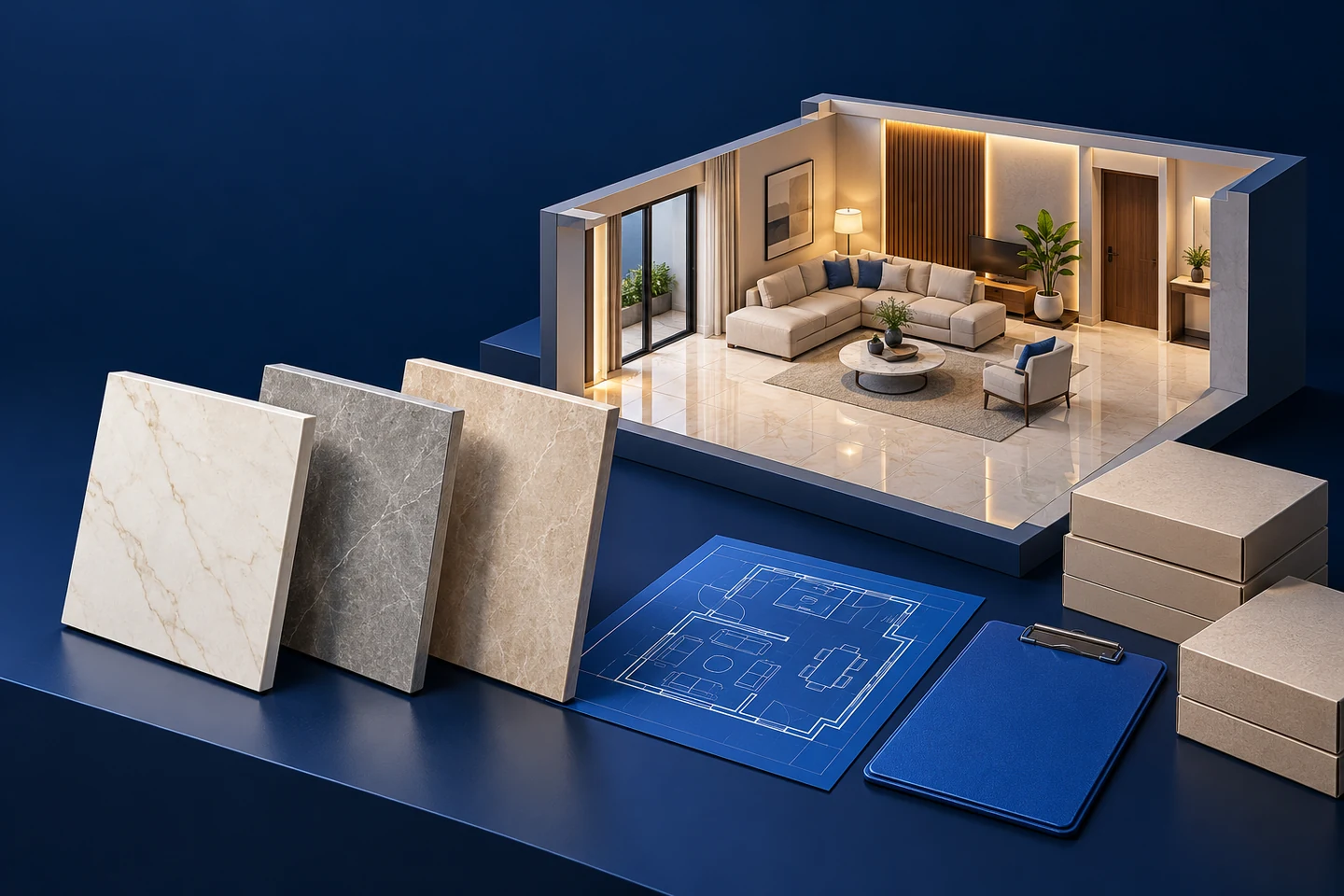
Before buying tiles for a Lahore home, confirm the measured areas, selected product, coverage per box and complete fitting scope. Ask the installer to check the layout and cutting allowance, then compare written quotations on the same basis. Keep the sample, order and delivery labels together so everyone can identify what was approved.
A low price per square foot does not tell you the final cost of a tiled room. Quantities, preparation, fitting, accessories and delivery also need a place in the budget. This guide helps local and overseas owners organise those decisions before paying for a large order; it does not prescribe a tile specification or installation method.
02 / Measure the surfaces you will actually tile
Create one line for each room and surface. Separate floors, walls, skirting, steps and decorative features instead of applying the house’s covered area to one tile rate. Record the unit, who measured it and the drawing or site-measurement date. Ask the installer to confirm how openings, recesses and awkward shapes are treated.
Keep a simple schedule with these fields:
- Room and surface, such as kitchen floor or bathroom wall.
- Measured area and measurement unit.
- Product code, nominal size and finish.
- Layout reference and allowance awaiting confirmation.
- Labelled coverage per box and proposed box count.
- Measurement reviewer, approval date and revision.
Do not mix square feet and square metres within the calculation. If a quotation uses a different unit, ask the supplier to show the conversion and the total coverage being supplied. A room schedule also makes a later design change visible: you can revise the affected room without losing the original whole-house budget.
03 / Turn the measured area into a checked order quantity
The basic calculation is the required area divided by the selected product’s stated coverage per box, rounded up to whole boxes. The final required area must reflect the agreed cutting allowance and any separately agreed spare stock. Confirm the layout before treating a calculator result as an order.
For illustration only, a measured floor of 20 square metres divided by a stated 2 square metres per box gives a baseline of 10 boxes. That baseline includes no cutting or spare allowance. If the reviewed order area were 23 square metres, the same calculation would produce 11.5 boxes, rounded up to 12. These invented numbers explain the arithmetic; they are not a recommended allowance or the coverage of a particular product.
Ask the installer to explain the allowance for your room shape, selected format and laying pattern. Record spare tiles separately so you know what should remain at handover. Do not automatically apply a percentage from an unrelated house or count the same allowance twice.
STILE’s Pakistan ToolBook page links to its tile calculator and product catalogues. A manufacturer calculator can help prepare a quantity estimate, while the actual product label and reviewed room layout should remain part of the purchasing check.
04 / Specify the product before comparing suppliers
Send each supplier the same product schedule. Include the manufacturer, collection or product code, size, finish, intended room and quantity. Ask for confirmation of the product’s intended use and relevant manufacturer information. A floor, shower area, external terrace and decorative wall should not receive an interchangeable specification simply because the tiles look alike.
Review a physical sample with your designer and installer. Note the approved code and finish, and ask how the pattern varies across a larger area. A photograph is useful for keeping a record, but lighting and screens can affect how a colour appears. For an overseas owner, nominate someone locally to review the physical sample and document the decision.
If the selected product is unavailable, request a clearly identified alternative with its own specification and price. Approve the change before purchase. A verbal description such as similar beige tile is too vague to reconcile against an invoice later.
05 / Compare the full room cost
Ask for a written quote that separates the tile supply from the work and associated materials. Give every supplier or contractor the same measured schedule, and ask them to mark exclusions explicitly. Suggested comparison lines are:
- Tile product, number of boxes, coverage and supply total.
- Skirting, trims, thresholds or other specified accessories.
- Delivery, unloading and any agreed handling charges.
- Surface preparation and removal work, where applicable.
- Specified fixing and jointing materials.
- Labour, cutting and separately priced details.
- Taxes or other charges included or excluded.
- Quote validity, availability, payment and return terms.
The installer should identify the preparation and installation system appropriate to the project. Avoid assuming that a labour rate includes every material or that the tile supply includes waterproofing work. Ask who is responsible for each part and have the applicable scope written down.
For a Lahore project, include the actual delivery destination and the site’s receiving arrangements when requesting a quote. Ask about delivery timing, unloading responsibility and secure storage before agreeing a date. This guide does not quote current Lahore tile prices: a useful price comparison needs dated offers for the same product, quantity and scope.
06 / Confirm batch information and inspect before installation
Retain the supplier’s product identification and photograph the carton labels. RAKO’s technical catalogue explains that its production batches can differ in shade and dimensions, and advises checking batch, shade, size and quality markings for tiles intended for one area. Ask the manufacturer or supplier of your chosen product how its own identification system works.
RAKO technical catalogue: production-batch identification, section 2.3
At delivery, compare the product and box count with the order. Record visible damage, missing items or a label mismatch, and ask the responsible reviewer to resolve concerns before installation proceeds with the affected material. Keep the original delivery note and the supplier’s response together.
Agree the inspection, return and replacement process before purchase. Do not assume every supplier accepts unopened surplus or fitted tiles under the same conditions. Keep a copy of the terms that applied to your order, including deadlines and collection charges.
07 / Keep purchasing decisions visible from overseas
Use one approval pack for each selected tile: room reference, sample photos, product code, measured schedule, quotation and decision date. Add the delivery labels and receiving record when the order arrives. Name the person authorised to approve substitutions so a supplier’s phone call does not become an undocumented design change.
Track ordered, received, installed and retained as spares separately. Paying for 12 boxes does not prove that the room has been completed. At handover, label spare stock by room and product and keep its location with the property record. This makes a future repair request easier to explain without relying on a remembered colour name.
08 / Make the tile decision part of the finishing plan
Before releasing an order, review four things together: the measured schedule, selected product, complete quotation and receiving responsibility. Record unresolved questions and who will close them. If the layout or product changes, update the quantity and budget before approving the revision.
ELEV8CONCEPTS can discuss your Lahore construction and interior-planning brief with those decisions in view. Share the drawings, rooms being finished and current stage so the proposed service scope can identify measurement, selection, costing and site-coordination responsibilities.
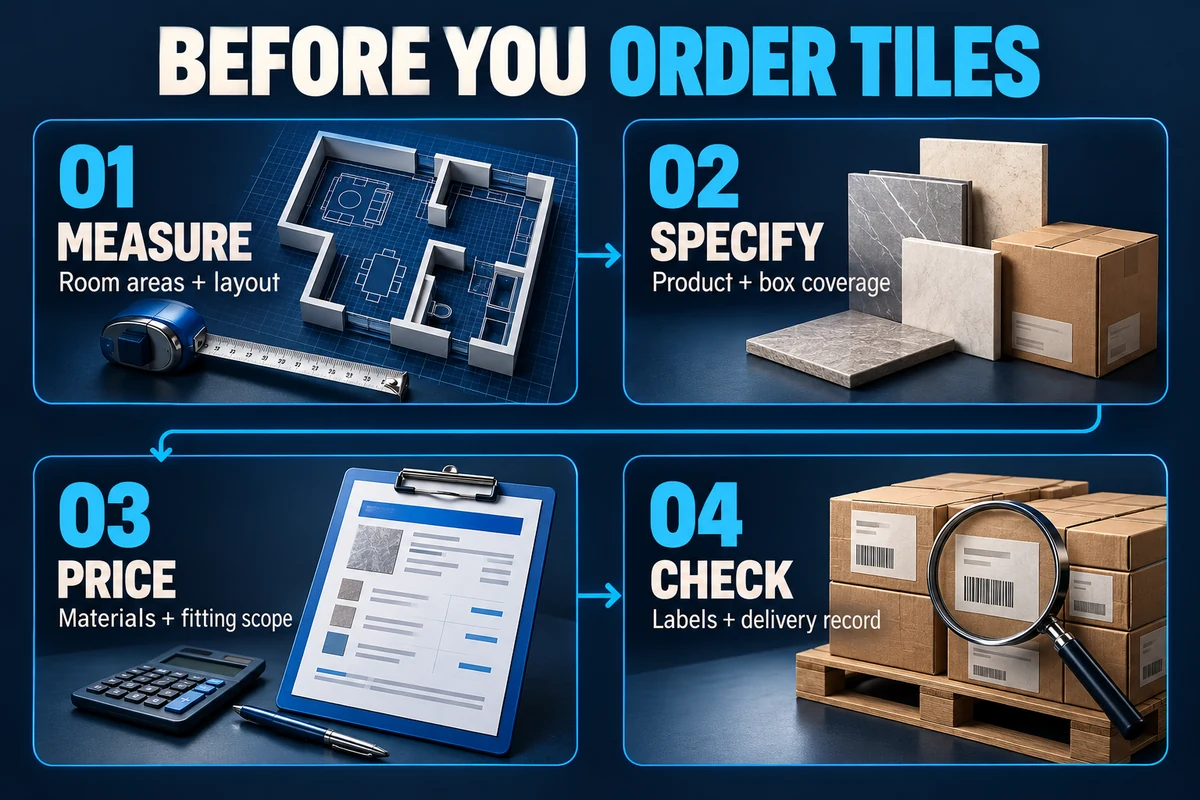
Before you order tiles.
Clear records help you follow decisions, review progress and keep the details that matter.
- Measure — room areas, surfaces, units and reviewed layout.
- Specify — product code, finish, box coverage and approved sample.
- Price — materials, preparation, fitting, delivery and exclusions.
- Check — carton labels, quantity, condition and receiving record.
Common questions.
How do I calculate how many boxes of tiles to buy?
Divide the reviewed order area by the selected product’s stated coverage per box, then round up to whole boxes. Have the installer confirm the layout, cutting allowance and spare stock first. Keep floors, walls and accessories separately identified.
How much extra tile should I allow for cutting?
Ask the installer to review the actual room shape, tile format and pattern and explain the proposed allowance. Record spares separately. This guide does not recommend one percentage for every project.
What should a tile fitting quotation include?
Clarify tile quantities and product codes, preparation, fixing and jointing materials, labour, cutting, accessories, delivery, taxes where applicable and exclusions. Confirm the payment, validity and return terms in writing.
What should overseas owners check before approving a tile order?
Keep the measured schedule, physical-sample review, product details and full quotation in one approval pack. Nominate someone locally to inspect the sample and delivery. Record substitutions and delivery-label checks before affected material is installed.