Better windows start with a clearer plan.
An Islamabad homeowner’s checklist for comparing window systems, coordinating room needs and keeping installation decisions clear.
Same foundations.
A brighter tomorrow.

01 / Choose windows as part of the house design
For an Islamabad home, compare the complete window system against the room, orientation and installation detail before ordering. Ask for a written schedule covering the frame, glass, opening style, performance evidence, hardware and fitting scope. A label such as double glazed or premium is not enough to tell you how the proposed window will work in your house.
Start while the elevations and room layouts can still be coordinated. Agree the opening, shade and curtain arrangement before manufacture. This guide helps owners prepare that discussion; final product selection and construction details should be reviewed by the responsible design team.
02 / Use Islamabad conditions rather than a generic promise
NEECA’s Energy Conservation Building Code 2023 includes weather-design data for Islamabad and a separate entry for Murree. Its building-envelope guidance also considers glazing, shading and air leakage. Ask the designer to use conditions appropriate to your actual site, rather than borrowing a specification from a hill-station house or treating all northern locations alike.
The code is a technical reference, not a statement that every provision applies identically to every private house. Have the project professional confirm current requirements for the property. Do not use a marketing promise about a fixed indoor temperature as a substitute for a project-specific design.
NEECA: Energy Conservation Building Code 2023
For a plot under CDA or a private housing scheme, ask whether changes to window openings or the elevation affect the approved drawings. Keep that decision with your architect before fabrication.
03 / Make a room-by-room window brief
Give each opening an ID that appears on the plan, elevation and quotation. Note the room’s purpose, the view and nearby furniture. Ask the designer to review sunlight, neighbouring buildings, privacy and proposed shading at that location.
- Living room: record seating positions, television location and the view.
- Bedroom: discuss privacy, curtains and how the opening will be operated.
- Kitchen: coordinate the window with cabinets, worktops and services.
- Bathroom: resolve privacy, ventilation and suitable materials together.
- Stairs and circulation: identify cleaning access and safety requirements for professional review.
Avoid deciding every window from the front elevation alone. Two rooms may need different opening arrangements even if their frames look similar outside. Leave an explicit question on the schedule where information is missing, instead of allowing an assumption to become a fabrication instruction.
04 / Compare products using evidence
Request the exact frame series, glass build-up, finish, opening style and hardware proposed. Ask which performance information applies to that configuration, and whether a quoted figure refers to the glass alone or the complete product. Have the designer explain what matters for the room rather than ranking products by one isolated number.
NFRC’s residential certification programme evaluates measures including U-factor, solar heat gain coefficient, visible transmittance and air leakage. Its published directory can help check a claim of NFRC certification. This is a reference for evaluating evidence; it does not mean every window sold in Pakistan is certified or that NFRC certification replaces local requirements.
NFRC: Residential product certification
If the offered product has no comparable performance documentation, record the gap. Ask what can be supplied and let the design team decide whether the proposal is adequate. Keep brochure claims separate from the specification the supplier commits to deliver.
05 / Review samples and measurements
Ask to see the proposed frame section, handles, locks and glass sample where practical. Review the sample alongside the intended finishes rather than choosing only from a small online image. Record the approved colour and product reference so a later substitution is visible.
Try the sample’s opening mechanism and discuss how insect screens, curtains or blinds will fit around it. Ask who measures the final site openings and who signs off fabrication dimensions. Resolve differences between the drawing and measured opening before manufacture.
For an owner overseas, use a dated sample record and a named local reviewer. Photos and a video call can support a choice, but someone on site still needs responsibility for measurements and agreed checks. Define that person’s decision authority so an urgent supplier question does not lead to an undocumented change.
06 / Include fitting in the quotation
Ask the contractor and supplier to agree installation details with the project designer. Identify who prepares the opening, installs the frame, completes surrounding finishes and checks the work. Ask how the joint, sill and water-management detail will be handled for the selected system; this checklist does not prescribe those technical details.
Include access, delivery, protection and removal of old frames if this is a replacement project. Clarify whether plaster, paint, external finishes, screens and hardware are included. Reconcile scope before comparing totals: a lower window price may cover less work.
Ask for the assumptions behind an energy-saving promise. Which existing condition, building design and operating pattern were used in the comparison? Keep any performance commitment in writing and distinguish it from a general product benefit. Do not turn a supplier’s estimate into a guaranteed saving for your home.
07 / Keep a useful handover file
Retain the approved schedule, drawings, supplier order, product information and agreed installation checks. Match deliveries to the schedule and record visible damage or substitutions. Keep unresolved issues open until the responsible reviewer records the outcome.
At handover, ask for an operating demonstration, maintenance instructions, warranty terms and a defect contact. Keep photographs of each opening and the completed checks. A photograph is not proof of a particular insulation or air-leakage rating; those claims need the relevant evidence.
For an existing house, record what was replaced and what surrounding work was completed. That helps future maintenance and identification of replacement hardware without guessing.
08 / Connect the choice to the wider project
Share the window schedule with the team coordinating curtains, joinery, finishes and ventilation. Keep the accepted revision together so each trade works from the same decision.
Review your house floor plan before approval
Plan interiors before finishing begins
ELEV8CONCEPTS welcomes enquiries about planning, construction and interiors. For an Islamabad property, confirm service availability and proposed scope with the team before assuming coverage. Share the location, drawings and whether this is a new build or replacement so the discussion starts with your actual needs.
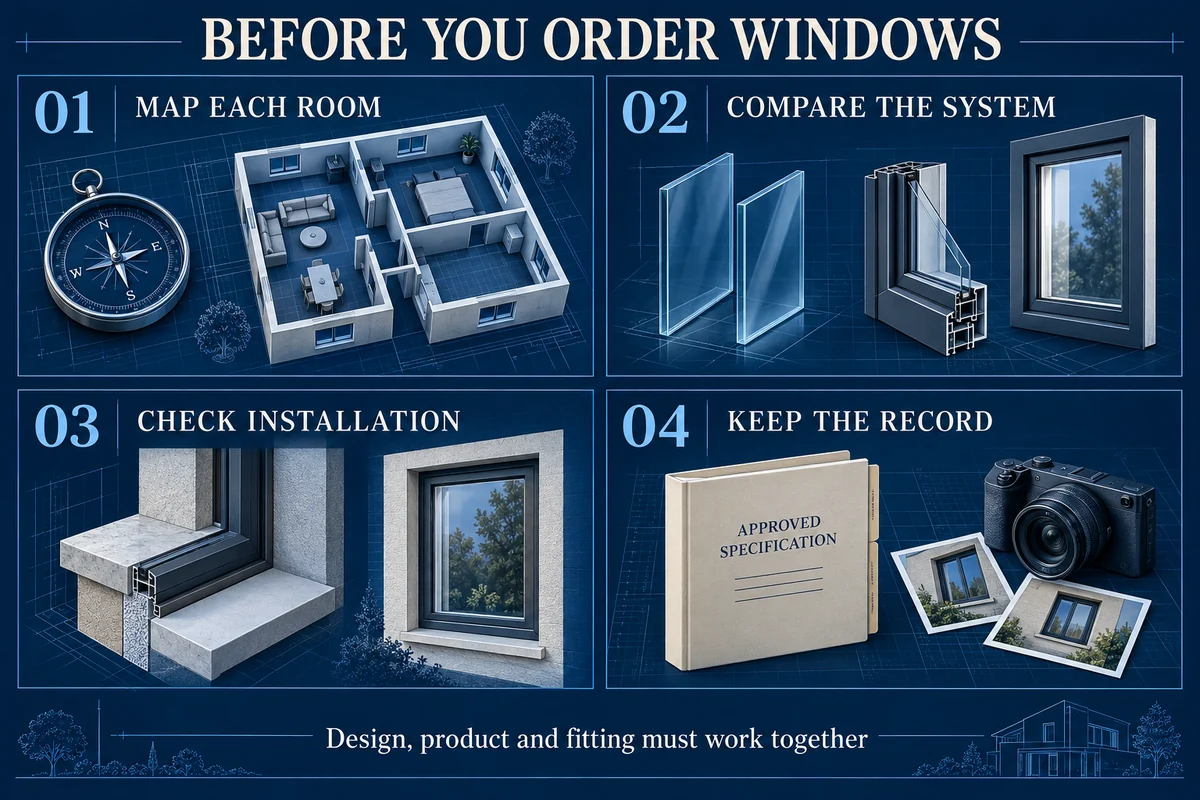
Before you order windows.
Clear records help you follow decisions, review progress and keep the details that matter.
- Map each room — opening ID, use, orientation, privacy and furniture.
- Compare the system — specified frame, glass, hardware and relevant evidence.
- Check installation — agree responsibilities, details and making-good scope.
- Keep the record — approved schedule, instructions and warranty.
Common questions.
Is double glazing alone enough to choose a window?
No. Ask for the complete frame and glazing specification, opening style, relevant performance evidence and installation scope. Have the project designer assess the proposed system for the room and site.
Should an Islamabad house use the same windows as a Murree house?
Do not assume so. NEECA’s building code lists Islamabad and Murree separately in its weather-design data. Ask the designer to use conditions appropriate to your property and review the complete building design.
Can I approve windows while living overseas?
You can review a documented schedule, samples and supplier evidence remotely. Assign a local person to coordinate measurements and site checks, and record who may approve changes before fabrication.
What should the handover file contain?
Keep the approved schedule, product references, order, installation records, operating and maintenance instructions, warranty terms and defect contact. Record unresolved issues and their resolution.